
What are Skin Cancers?
Skin cancer is the most common cancer in the United States, and Arizona’s intense sun makes early detection especially important. At Mountain View Dermatology and Aesthetics in Tucson, AZ , Dr. Marc I. Epstein and his team provide thorough skin cancer screenings, accurate diagnosis, and advanced, effective treatment for basal cell carcinoma, squamous cell carcinoma, melanoma, and precancerous lesions.
Request an AppointmentTypes of Skin Cancer
The three main types of skin cancer are basal cell carcinoma (BCC), squamous cell carcinoma (SCC), and melanoma. Each is named after the type of skin cell it affects.
- Basal cell carcinoma develops in cells at the base of the epidermis. It is the most common form of skin cancer and usually grows slowly, but it can damage surrounding tissue if left untreated.
- Squamous cell carcinoma appears in the upper layers of the skin. It is the second most common type and can spread if not treated promptly.
- Melanoma is the most aggressive form. It affects pigment-producing cells and often appears as a black or brown mole, but it can also be pink, red, or skin-colored.
One of the most common precancers is actinic keratosis, also known as solar keratosis, a rough, scaly patch caused by long-term exposure to ultraviolet rays from the sun or tanning beds. Treating these lesions early can help prevent progression to squamous cell carcinoma.
Who Is at Risk for Skin Cancer?
Skin cancer often develops on areas exposed to the sun and is more common in individuals with lighter skin tones, light eyes, and hair that is blond or red. A family history of skin cancer, a personal history of sunburns or tanning bed use, numerous or atypical moles, and a weakened immune system also increase risk. In Southern Arizona, abundant year-round sunshine and high UV levels mean that everyone benefits from regular skin checks.
What Are the Symptoms of Skin Cancer?
Recognizing early signs of skin cancer is crucial for timely care.
Basal Cell Carcinoma (BCC)
- Pearly or waxy bumps
- Flat, flesh-colored or brown scar-like lesions
- Open sores that do not heal or that bleed and crust repeatedly
Squamous Cell Carcinoma (SCC)
- Firm, red nodules
- Flat lesions with a scaly, crusted surface
- Sores that heal and reopen
Melanoma
- Large brown spots with darker speckles
- Moles that change in color, size, or texture
- Small lesions with irregular borders and areas of red, white, blue, or blue-black
Dermatologists use the ABCDE guide to evaluate moles: Asymmetry, Border irregularity, Color variation, Diameter larger than a pencil eraser, and Evolving size, shape, or color. Any spot that looks different from your other moles, sometimes called the “ugly duckling” sign, should be checked.
Skin Cancer Screenings in Tucson, AZ
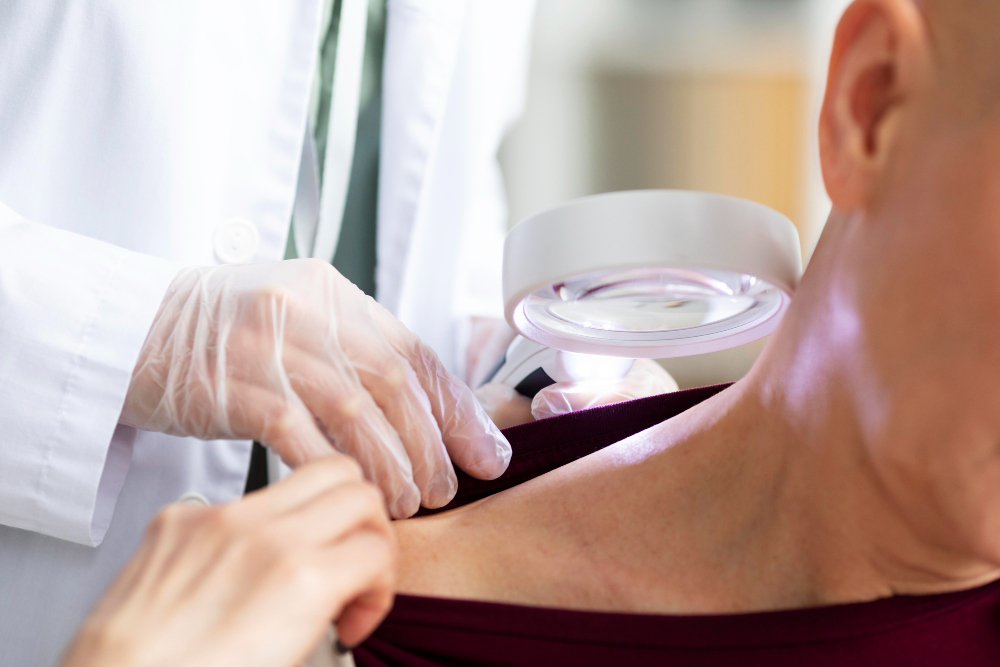
A full-body skin exam is quick, painless, and one of the most effective ways to catch skin cancer early. During your screening, Dr. Marc I. Epstein or a member of his team examines your skin from scalp to toes, often using dermoscopy to look more closely at suspicious spots. If a lesion looks concerning, a simple in-office biopsy can confirm the diagnosis. Some benign growths, such as seborrheic keratoses, can resemble skin cancer, which is why an expert exam matters.
How Are Skin Cancers Treated?
Treatment is customized based on the size, location, depth, stage, and type of skin cancer. The most effective approach typically involves removing the growth completely. Depending on your needs, treatments may be minimally invasive, noninvasive, or surgical, and many can be performed on an outpatient basis with local anesthesia. Options may include excision, curettage and electrodesiccation, cryotherapy for certain precancers, and prescription topical therapies. Your provider will explain the benefits of each option and recommend the approach most likely to give you a complete cure with the best cosmetic outcome.
Preventing Skin Cancer
Protect your skin every day by wearing a broad-spectrum sunscreen of SPF 30 or higher, reapplying every two hours outdoors, wearing protective clothing and wide-brimmed hats, seeking shade during peak sun hours, and avoiding tanning beds. Our team can recommend medical-grade sunscreens on our Skin Care Products page. For visible sun damage, treatments such as BBL Hero and the Contour TRL laser peel can improve tone and texture after any concerning lesions have been evaluated. Learn about other conditions we treat.
Skin Cancer FAQs
How often should I get a skin cancer screening?
Most adults should have a full-body skin exam once a year. People with a history of skin cancer, many moles, or significant sun exposure may need checks every three to six months.
Is skin cancer common in Arizona?
Yes. Arizona’s high UV levels and year-round sunshine contribute to higher rates of skin cancer, making prevention and regular screenings especially important.
What does a skin cancer screening involve?
Your provider examines your skin from head to toe, including the scalp and nails, and may use dermoscopy to look closely at suspicious spots. A biopsy may be recommended if a lesion looks concerning.
Is a skin biopsy painful?
A biopsy is performed with local anesthesia, so most patients feel only a brief pinch from the numbing injection.
Can skin cancer be cured?
Most skin cancers are highly curable when detected and treated early. Early detection is especially important for melanoma.
Can people with darker skin get skin cancer?
Yes. Although risk is higher in people with lighter skin, anyone can develop skin cancer. In darker skin, it may appear in less sun-exposed areas such as the palms, soles, or under the nails.
How do I schedule a skin cancer screening?
Call (520) 881-8161 or request an appointment online to schedule your exam.
Schedule Your Skin Cancer Screening
Early detection saves lives. Call (520) 881-8161 to schedule a full-body skin exam at Mountain View Dermatology and Aesthetics.