
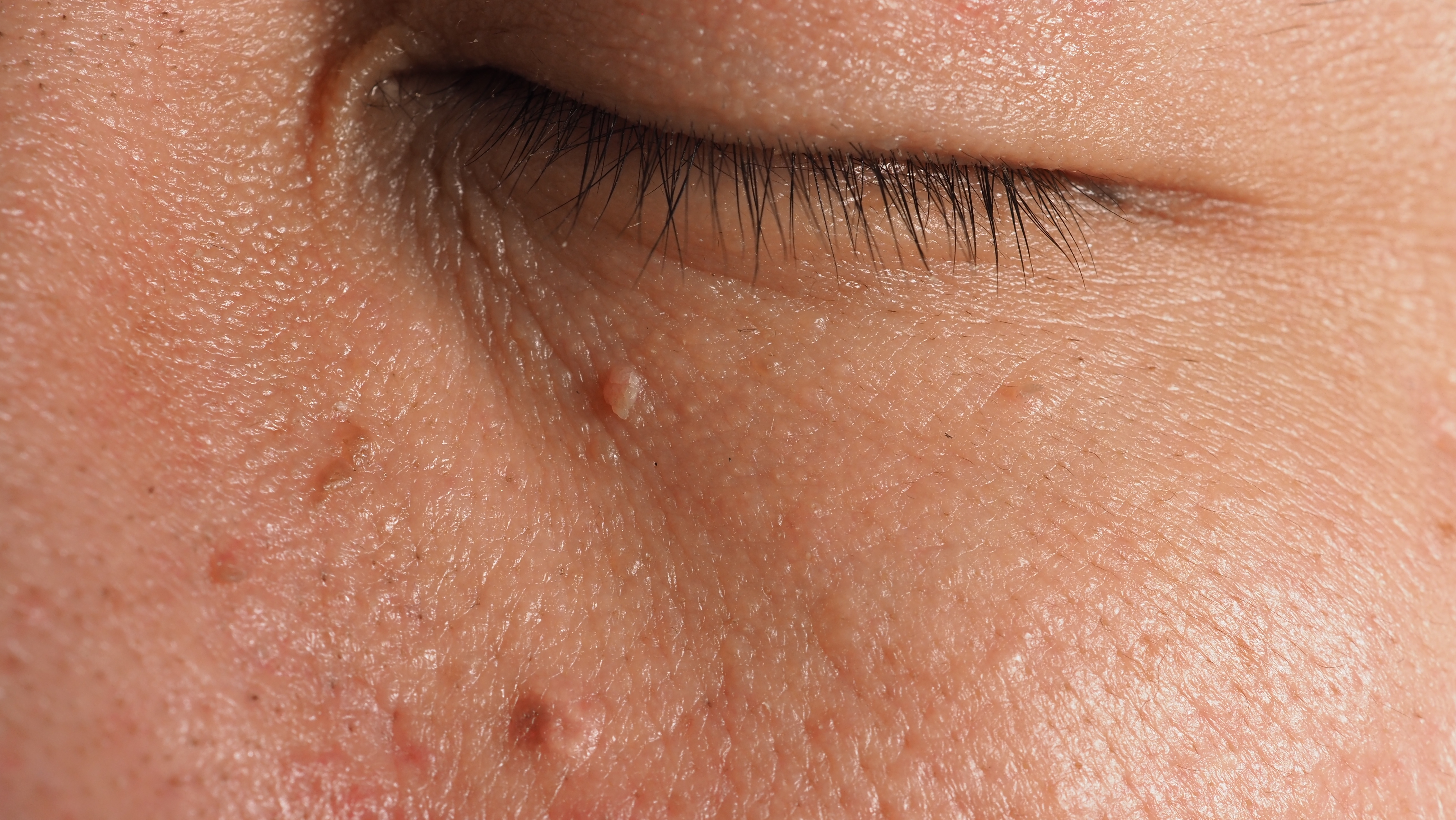
What are Moles, Warts, and Molluscum?
At Mountain View Dermatology and Aesthetics in Tucson, AZ , Dr. Marc I. Epstein and his team evaluate and treat moles (nevi), warts, and molluscum contagiosum. These lesions may appear as raised bumps or darker spots, and while many are harmless, they should always be evaluated because some may indicate skin cancer. We provide safe in-office removal and tailored guidance to help manage symptoms and prevent spread.
Request an AppointmentMoles, Warts, and Molluscum: What Is the Difference?
Although these growths may look similar at first glance, they have very different causes:
- Moles (nevi) are clusters of pigment-producing cells. Most are harmless, but some can develop into melanoma, the most serious form of skin cancer.
- Warts are caused by the human papillomavirus (HPV) and can spread through direct contact or shared surfaces such as pool decks and locker rooms.
- Molluscum contagiosum is a viral infection that causes small, dome-shaped bumps. It spreads easily through skin contact, shared towels, and scratching.
What Are the Symptoms?
Recognizing the signs of these skin conditions can help with early detection and treatment.
Warts
- Rough texture
- Flesh-colored, white, pink, or tan bumps
- Tiny black dots (clotted blood vessels)
- Often appear on the hands, fingers, or soles of the feet
- Can be painful, especially on the feet
Moles
- Brown or black round or oval growths
- Flat or raised in appearance
- Smooth or rough texture
- May change in color or remain stable over time
- Commonly develop during childhood or before age 25
Use the ABCDE guide to monitor moles: Asymmetry, Border irregularity, Color variation, Diameter larger than a pencil eraser, and Evolving size, shape, or color. Any mole that changes, itches, or bleeds should be checked promptly.
Molluscum
- Small, round, firm bumps on the skin
- Flesh-colored, pink, or white in appearance
- Often have a small indentation or dimple in the center
- May appear singly or in clusters, often in a line
- Typically not painful but may cause itching
How Are Moles, Warts, and Molluscum Treated?
Lesion removal for moles and warts is performed in-office under local anesthesia in our minor procedure suite. The treatment method depends on the size, location, and depth of the lesion:
- Shaving technique – for surface-level lesions
- Liquid nitrogen (cryotherapy) – for targeted freezing of growths
- Excision – for deeper or larger lesions
During your consultation, we determine the most effective treatment approach while working to minimize scarring. Moles that look suspicious are sent for evaluation by a lab to confirm whether they are benign.
For molluscum contagiosum, we offer several treatment techniques:
- Scraping (curettage): Removes bumps from the skin, though it does not cure the virus
- Freezing (cryotherapy): Uses liquid nitrogen to freeze lesions; may require multiple sessions
- Cautery: Heat is applied to remove visible bumps; repeat sessions may be needed
To help prevent spread, avoid scratching or shaving over bumps, and do not share towels or razors.
Other Common Skin Growths
Not every bump is a mole or wart. Waxy, “stuck-on” spots are often seborrheic keratoses, and rough, scaly patches on sun-exposed skin may be actinic keratosis. Our team can identify the growth and recommend the right next step. For overall skin rejuvenation after lesion removal, ask about BBL Hero or laser skin resurfacing. Explore all conditions we treat.
Moles, Warts, and Molluscum FAQs
Should I have my moles checked?
Yes. Regular skin exams help detect changes early. Any mole that is new, changing, irregular, itchy, or bleeding should be evaluated promptly.
Can moles be removed for cosmetic reasons?
Yes. Moles can be removed for cosmetic reasons or because they are irritated. Our team will discuss the best removal method to minimize scarring.
Are warts contagious?
Yes. Warts are caused by HPV and can spread through direct contact or shared surfaces.
Will molluscum go away on its own?
Molluscum may clear on its own over months to years, but treatment can speed resolution and reduce spread.
Does mole removal leave a scar?
Any removal can leave a mark, but our team uses techniques designed to minimize scarring based on the mole’s size and location.
Is wart removal painful?
Most treatments cause only brief discomfort. Local anesthesia is used for procedures such as shave removal and excision.
How do I schedule a skin growth evaluation?
Call (520) 881-8161 or request an appointment online.
Have a Spot Checked Today
Peace of mind starts with an expert evaluation. Call (520) 881-8161 to schedule your visit at Mountain View Dermatology and Aesthetics.