
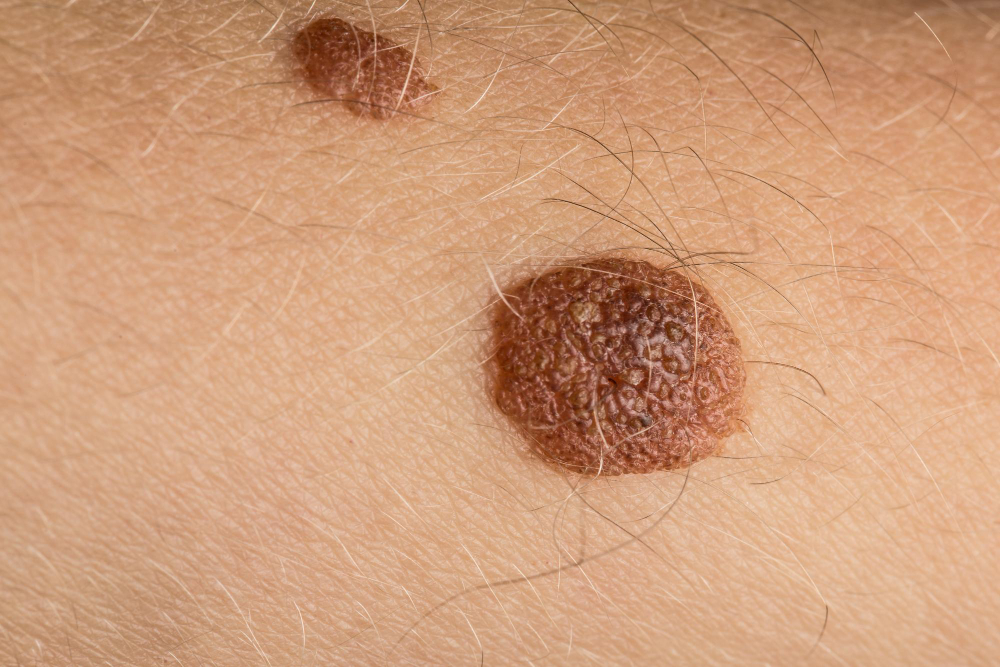
What is Seborrheic Keratosis?
Seborrheic keratoses are common, noncancerous skin growths that often appear as waxy, tan, brown, or black spots with a “stuck-on” look. They become more common with age and can show up on the face, chest, back, and scalp. At Mountain View Dermatology and Aesthetics in Tucson, AZ , Dr. Marc I. Epstein and our team evaluate these growths and offer quick, in-office removal for spots that are irritated or bothersome.
Request an AppointmentWhat Causes Seborrheic Keratosis?
The exact cause of seborrheic keratosis is not known, but these growths are strongly linked to aging and genetics. They usually begin to appear after age 40 and tend to increase in number over time. If your parents had many seborrheic keratoses, you are more likely to develop them as well. Some research suggests sun exposure may play a role, since they frequently appear on sun-exposed areas, but they can also develop on skin that rarely sees the sun. Seborrheic keratoses are not contagious and do not spread from one person to another.
What Does Seborrheic Keratosis Look Like?
Seborrheic keratoses can vary in appearance, but common features include:
- A waxy, scaly, or slightly raised surface that looks “stuck on” to the skin
- Colors ranging from light tan to brown or black
- Round or oval shape, from very small to over an inch across
- A rough or warty texture
- Single growths or clusters on the chest, back, face, scalp, or shoulders
These growths may become itchy or irritated, especially when they rub against clothing, bra straps, or jewelry. Some patients also find them cosmetically bothersome.
Why a Dermatology Evaluation Matters
Although seborrheic keratoses are harmless, they can look similar to other skin growths, including moles and warts, actinic keratosis, and even melanoma. A dark or irregular seborrheic keratosis can be difficult to distinguish from skin cancer without an expert exam. Dr. Marc I. Epstein and our team examine growths carefully, often using dermoscopy, and may recommend a biopsy if a spot looks unusual. You should always have a growth checked if it changes quickly, bleeds, or looks different from your other spots.
Seborrheic Keratosis Removal at Mountain View Dermatology and Aesthetics
Treatment is not medically required for most seborrheic keratoses, but removal is a good option for growths that are irritated, itchy, inflamed, or cosmetically bothersome. Depending on the size, number, and location of your growths, removal options may include:
- Cryotherapy, which uses liquid nitrogen to freeze the growth so it falls off
- Curettage, which gently scrapes the growth from the skin surface
- Electrocautery to remove the growth and minimize bleeding
- Shave removal, which also allows the tissue to be examined if needed
Removal is quick, performed in our Tucson, AZ office, and typically involves minimal downtime. After treatment, the area may appear pink or lighter for a period before blending in with the surrounding skin.
Keeping Your Skin Healthy as It Ages
Seborrheic keratoses often appear alongside other age- and sun-related changes such as sunspots and uneven texture. For overall rejuvenation, our aesthetic team offers treatments like BBL Hero, laser peels, and laser skin resurfacing. Regular skin exams remain the best way to monitor new and changing spots. Learn about other conditions we treat.
Seborrheic Keratosis FAQs
Is seborrheic keratosis cancerous?
No. Seborrheic keratoses are benign growths and do not turn into cancer. However, some can resemble skin cancer, so new or changing spots should be evaluated by a dermatologist.
Why do I keep getting more seborrheic keratoses?
They are linked to aging and genetics, so it is common to develop new ones over time, especially after age 40.
Can I remove a seborrheic keratosis at home?
We do not recommend it. Picking, cutting, or using over-the-counter freezing kits can cause bleeding, infection, or scarring, and it prevents proper evaluation of the growth.
Does seborrheic keratosis removal leave a scar?
Removal usually heals well with minimal scarring. The treated area may be temporarily lighter or pinker than surrounding skin.
Is removal covered by insurance?
Insurance may cover removal of growths that are irritated, inflamed, or bleeding. Removal for purely cosmetic reasons is typically not covered. Our team can help you understand your options.
Will a removed seborrheic keratosis come back?
A properly removed growth usually does not return in the same spot, but new seborrheic keratoses may develop elsewhere over time.
How do I schedule an evaluation?
Call (520) 881-8161 or request an appointment online to have your growths examined in our Tucson office.
Have a Spot You Want Checked?
If you have a growth that is irritated, changing, or simply bothering you, our team can help. Call (520) 881-8161 to schedule an evaluation at Mountain View Dermatology and Aesthetics.